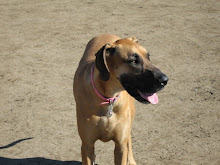
Separation anxiety is a problem wherein a dog is very anxious when left alone. Symptoms can include: whimpering, salivating, barking, housebreaking accidents, chewing, excessive licking, scratching or digging. Some dogs may even show symptoms when owners go into another room, or to throw out the trash!This can be very upsetting for pet owners as well. Not only does it tend to make one feel guilty for going out, but it’s also no fun to return home to accidents, home damage, or an injured pet. However, there are many things humans can do to prevent or alleviate this problem!First, it’s very important to make sure your dog is confined to a safe area, such as a crate, when you’re out. Dogs being den animals, feel safer in their own small, enclosed space. This will also protect both your pet and your belongings. Click here for info on recommended crates. Click here for crate training article.Next, be sure that you don’t make a big deal when leaving or returning home. Don’t smother your dog with kisses, apologies, and a tearful goodbye. A flippant "See ya later!" is more appropriate. When arriving home, you’ll need to immediately take your dog outside to eliminate. However, during those first 10 minutes home, avoid eye contact and act like your return is no big deal.Another key ingredient is obedience training. This will help build your dog’s confidence so he feels more comfortable "in his own skin" and within your household pack. You’ll also be able to use commands such as the down/stay to teach your pet to be more independent when you are home. Practice having your dog down/stay while you move about the house, rather than always following you like a shadow."A tired dog is a good dog" also goes a long way with separation anxiety. A good session of exercise immediately before leaving will be more conducive to your pet relaxing while you’re out.Finally, and this is extremely important… never correct your dog for "crimes" committed while you were gone! This will definitely make the problem much worse, as your dog may be double worried… about you being gone, and you returning home!Often, alleviating separation anxiety will require working with a qualified professional dog trainer. However, most improve quite nicely, resulting in both you and your pet relaxing when you’re out!
This article was written by Lori Verni Lori Verni is a freelance writer, Certified Master Trainer and owner of Best Paw Forward Dog Education in Holly Springs, NC. She also proudly brings you all of the free articles on FreeDogTrainingInfo.com, and has a book available: Everything You Need to Know About House Training Puppies & Adult Dogs. The book can be purchased at www.FreeDogTrainingInfo.com
Keywords: dog toys, dog beds, dog collars, pet supplies, dog training, dog health
Saturday, March 15, 2008


Housbreaking an Older Dog
Housebreaking an older dog is not an impossible task. Although it is generally easier to housebreak a puppy, any dog can be housebroken given the proper techniques. First, before you begin, you must know how a dog thinks. I would say that a dog thinks 80% of the time with its nose, and the rest of the time with its other senses. If you look at animals in the wild, you’ll notice that most mammals like Wolves, Lions, Tigers, and WildDogs scent mark their territories. This is not only a sign of demarcation, but a place where these animals return to mark over and over again, in order warn other animals or their rivals that this is their territory. It is precisely this habit that the distant cousins of wolves, our dogs, exercise on a daily basis. That is, dogs know and remember where to go “potty” by mainly using their sense of smell. Dogs a creatures of habit; therefore, they generally like to go “potty” after a meal, after they wake-up from a nap, and after they exercise. Your job is to recognize when your dog needs to “go” and guide it to the pre-designated area before it does its business. Thus, you must monitor your dog for at least 2 weeks until the desired outcome is programmed into your dog’s psyche.So, what are you to do if your dog makes a mistake and “goes” in the middle of your living room? The answer depends on whether you catch your dog in the middle of the act or not. If you catch it in the middle of the act, you can say something like “no,” and quickly lead your dog to the desired location before it finishes doing its business. If, however, you find the mess after the fact, you must NEVER punish your dog. Your dog simply won’t understand what it is being punished for and it will soon learn to fear you instead of look at you as its leader.The question then is “what should one do if one finds the mess after the fact?” My advice is as follows: take a newspaper or towel and rub it onto the mess; then, take it back to the location where you desire your dog to “potty,” and smear that area. This will teach your dog to use its natural instincts (to scent mark) to go “potty” exactly where you want it to. But you still are not done yet! Now you must erase your dog’s memory of the location in your house where it had gone “potty” by properly cleaning the spot with the right cleaning agent. Cleaning with ordinary household cleaners is a bad idea. Most household cleaners contain Ammonia; the very ingredient in Urine which arouses a dog’s instinct to scent mark. So, instead of using ordinary household cleaners, use a product like “Nature’s Miracle,” which is specifically designed to remove the smell of urine and feces and erase you dog’s memory of the previous location where it had done its business.The key to housebreaking an older dog is patience. Be patient, and you dog will learn to do what you ask of it in no time.
About The AuthorArmen T. Ghazarians offers advice and articles for those interested in training their dogs like the professionals. His blog http://www.prsnal.blogspot.com offers information regarding many aspects of professional dog training for anyone who is not a professional dog trainer.
Keywords: dog carriers, dog toys, dog beds, dog collars, pet supplies, dog training, dog bowls
About The AuthorArmen T. Ghazarians offers advice and articles for those interested in training their dogs like the professionals. His blog http://www.prsnal.blogspot.com offers information regarding many aspects of professional dog training for anyone who is not a professional dog trainer.
Keywords: dog carriers, dog toys, dog beds, dog collars, pet supplies, dog training, dog bowls
House Train A Dog - Quick Help
The good news is that you can house train a dog (an adult dog that is) fairly quickly…faster than puppies anyway…the bad news is, you’ve got to be consistent and actually do the work because your dog won’t have a clue what to do.So how do you get started?...I thought you’d never ask.1. Set Up “His Space”Create an area where you can confine your pooch…you’ll use it for those times when you’re away or when you don’t want to be keeping a close eye on him…make sure a large part of that space is covered with newspapers too (about 3 sheets thick).When (not if) he uses the papers, clean up the mess and replace the papers as soon as you can…but place one of the soiled papers right in the middle of the new batch…this will help build the “here is where I go” idea in his brain. Over time (maybe days, maybe weeks) his “aim” will improve and you’ll be able to reduce the papered area to maybe just a single sheet.2. Create a Feeding & Watering RoutineYour best partner in house training your buddy will be setting up and sticking to a feeding and watering schedule…feed and water him at the same times every day – no exceptions…no snacks in between; no special treats (until he’s trained)…in this way his body will automatically respond to the schedule and be predictable…this will help you immensely with your house training.3. Observe, Observe, ObserveKeep an eye on him at all times (when he’s not in “his space”)…now that he’s on a schedule, you’ll find out that Fido will need to “go” shortly after each feeding session, and perhaps shortly after each watering session and maybe a few more unpredictable times…watch him closely and learn what his body language is when he needs to relieve himself…is he suddenly restless; is he sniffing around; is he (and wouldn’t this be great?) scratching at the door?4. Do Your Leg WorkWhen he “shows the signs,” put him on a leash and get your legs workings…take him outside to the place you want him to use. Make sure this is the same place every time…don’t confuse him by switching it around on him.Be patient and while he’s sniffing around, repeat a command he can associate with this behavior in the future…use something like “go, go, go” or “time to go boy,” etc…then when he finally “goes,” make sure to give him a lot of praise and strokes…you want him to associate that praise with his actions so his little doggie brain will remember “Go Outside = Good Stuff”5. Correcting MistakesIf he goes “where no dog has gone before,” immediately, make eye contact with him and correct him with a firm “No” then lead him to the place you want him to use (either outside or to his “papers”)But you must remember (and never forget) you can only correct him if you catch him in the act…if it’s any later, even just seconds later, your correction won’t work; he won’t make the connection you want…in fact, it will have a negative impact…so, if you miss your chance, you’ll just have to be more vigilant and catch him the next time.But once the deed is done, clean up the mess completely and remove the odor completely too, because it will be the smell that brings him back to that spot for a return visit.6. Keep Your Attitude PositiveKeep in mind that house training any dog takes time…it could take weeks…some dogs will be able to control themselves sooner than others and some will learn what you want from them sooner than others. If you want to be successful in the shortest amount of time, it’s up to you to maintain the right attitude and be persistent and consistent so your buddy has the best chance to learn.I hope this helps…thanks for reading.Did you know that to house train a dog is just the first training step you’ll take with your pooch? Need help taking the next steps? Then check out http://AlexionReviews.com.
About The Author Michael Royce is an amateur dog trainer who has lived with, trained, (and been trained by) more than a dozen dogs in the last 25 years. He is a regular contributor to several websites including http://The-Dog-Zone.net
Keywords: pet meds, dog toys, dog beds, dog collars, pet supplies, dog training, dog bowls
About The Author Michael Royce is an amateur dog trainer who has lived with, trained, (and been trained by) more than a dozen dogs in the last 25 years. He is a regular contributor to several websites including http://The-Dog-Zone.net
Keywords: pet meds, dog toys, dog beds, dog collars, pet supplies, dog training, dog bowls
House Training Accidents in a Certain Spot
Without question, house training is one of the top priorities for dog owners. While we all expect puppies to require house training, there are many older dogs who have ongoing confusion too.One of the most frequent housebreaking dilemmas is when the dog seems to be house trained, but occasionally has accidents in a certain spot in the home. Some of the most common locations where these accidents to happen are formal dining rooms, guest rooms, basements, laundry rooms and hallways. However, regardless of where your dog’s confusion spot is, you can train him so it stops.The first step in alleviating this problem is to understand how dogs think regarding house training. Dogs are innately clean animals, who generally don’t like to soil where they live. Instinctively, even wild dogs will choose separate areas for eating, resting and eliminating.Housebreaking builds off of your dog’s natural instinct to keep his living space clean. This is why one of the first areas dogs learn to keep clean is their crate, usually followed by the rooms in your home where he spends the most time (kitchen, living room, etc.).So why does your dog sometimes have accidents in that certain spot? Usually, the accident spot is one where he doesn’t spend much time… like the formal dining room, guest room or garage. Since he doesn’t spend much time there, he may not feel like it’s part of his home where he lives and so should be kept clean. In your dog’s mind, this spot is “other than where he lives” and therefore is about the same as eliminating outside.Now that you understand why your dog is having these accidents, it’s time to clear up the confusion! The best way to do that is to spend lots of time in the area with your pet, so your dog will feel like he does live there and will want to keep it clean. This can be accomplished by practicing obedience in the area, brushing and playing with your dog in the area, and even feeding your pet there for awhile so it seems even more like a food area where he shouldn’t go to the bathroom.Of course, be sure to clean the spot thoroughly with an odor neutralizer so your dog is not attracted to the spot due to old smells.By implementing the simple steps of making your dog feel like he lives in all areas of your home, supervising him, practicing obedience and praising outdoor eliminating, you can prevent or alleviate this problem so you’ll be able to trust and enjoy your pet much more.For more details about this and other house training problems, buy the book, "Everything You Need to Know About House Training Puppies & Adult Dogs", by Lori Verni (the author of this article!).
Article written by Lori VerniLori Verni is a freelance writer, Certified Master Trainer and owner of Best Paw Forward Dog Education in Holly Springs, NC. She also proudly brings you all of the free articles on FreeDogTrainingInfo.com, and has a book available: Everything You Need to Know About House Training Puppies & Adult Dogs. The book can be purchased at www.FreeDogTrainingInfo.com
Keywords: dog toys, dog beds, dog collars, pet supplies, dog training, dog health
Article written by Lori VerniLori Verni is a freelance writer, Certified Master Trainer and owner of Best Paw Forward Dog Education in Holly Springs, NC. She also proudly brings you all of the free articles on FreeDogTrainingInfo.com, and has a book available: Everything You Need to Know About House Training Puppies & Adult Dogs. The book can be purchased at www.FreeDogTrainingInfo.com
Keywords: dog toys, dog beds, dog collars, pet supplies, dog training, dog health
Housebreaking 101
Remember that dog who just knew you didn't want her piddling in the house? Some dogs just need a slight sense of disapproval from you, and they virtually housebreak themselves.But you don’t have one of those dogs…or you wouldn’t be reading this!So how do we house train the dog who just doesn’t seem to get it? Believe it or not, it’s simple.I have two key words for you:Confine and Observe.While there is a great deal to know about food and water scheduling, timing can vary from dog to dog. So we’ll just concentrate here on the main concept which is to confine your dog to an appropriately sized crate when you cannot observe her.A properly sized crate is large enough for your dog to stand up and turn around, but hardly bigger than that. If you have a puppy in a large crate, she’ll think she’s got a bedroom with a bathroom built in. She’ll wee in one corner and sleep in the other.The correctly sized crate consists of bedroom only with no “bathroom.” So if your crate is too large, go to the pet store and purchase a crate divider so you can temporarily reduce the accessible area.Fido should be in her crate unless you can observe her 100%. This means that when the dog is loose, she has your undivided attention. Consider attaching a 6 foot light cord to the collar so you can more easily locate the dog, and prevent her from leaving the room without you. Simply step on the cord to stop her.At the first sign your dog needs to go, whisk her outside. Those signs include circling, sniffing, anxiousness, whining among other symptoms.When you’re not observing your dog with full attention, you confine her to the crate. That being said, you do need to ensure your dog has liberty periodically so she’s not all day in the crate. By being diligent now, you’ll be able to give Fido years of liberty with no worries. So it’s well worth the investment in time at this stage.Be sure you spend time playing with your dog, and also let her wander outside the crate. Avoid tossing her in the crate as punishment. Alleviate your guilt feelings by placing bones smeared with peanut butter in with her.This method makes it impossible for your dog to have an accident. You’re either right there to take her out, or she’s in the crate where she won’t want to go. When you’ve had a month with no accidents, you can begin to let the dog earn a little more liberty, five or ten minutes at a time.That means she can be out of your sight for a few moments at a time. But only a few. You want to build slowly on a record of success until your dog literally forgets that the house ever contained a bathroom.For each week with no accident, you can give Fido a few more moments of liberty at a time. However, if there is an accident, go back a step, and reduce that liberty. One accident in the house erases progress made for the several previous days.Confine and Observe your way to house breaking success. In the course of just two or three months, you’ll have a dog you can trust in the home. It’s going to be worth the effort!
About The Author Marc Goldberg is a dog trainer specializing in the rehabilitation of difficult dogs and improving relationships. He is Vice President of the International Association of Canine Professionals (IACP) and Editor of SafeHands Journal. The author also educates professional dog trainers in his techniques. Visit him on the web at http://www.chicagodogtrainer.com or http://www.dogtraininginchicago.com. http://www.chicagodogtrainer.com
Keywords: dog toys, dog beds, dog collars, pet supplies, dog training, dog health
About The Author Marc Goldberg is a dog trainer specializing in the rehabilitation of difficult dogs and improving relationships. He is Vice President of the International Association of Canine Professionals (IACP) and Editor of SafeHands Journal. The author also educates professional dog trainers in his techniques. Visit him on the web at http://www.chicagodogtrainer.com or http://www.dogtraininginchicago.com. http://www.chicagodogtrainer.com
Keywords: dog toys, dog beds, dog collars, pet supplies, dog training, dog health
House Training Dogs Successfully
You could House train your dog easily if you had the time to watch your puppy 24 hours a day. But as you can’t watch them around the clock, don’t expect to train them all at once. Training can take up to about 6 months. Puppies are growing and developing quickly at this stage. They eat more food and burn up lots of energy and consequently need to ‘go’ more often.The most important issue in house training dogs should be teaching him to control his bowel. When he is still a puppy, he has not yet developed bladder control. House training dogs is hard when you are not home. Your puppy needs a lot of attention. You should first confine your puppy in a puppy-proof room with paper spread all over the floor. Put his water bowls and food right next to it. The papers you have set on the floor may be dragged and chewed around his little den, but its important and helpful in teaching your puppy where to eliminate his waste properly. There will be no reason for him to defecate elsewhere. Your puppy will ‘go’ on the paper, and you need to clean it up when you arrive home. This may be an additional job for you, but patience is all it takes. Don’t worry because later on, he will move past this stage.Paper training is very useful and a proven technique in training dogs. In this way, no matter where the dog relieves himself, he will still eliminate on the paper because he has no choice. Little by little, you will see some changes. Gradually reduce the amount paper you have set on the ground. Start to move the paper outside the house. Of course, as your puppy has become used to using the paper he will look for it. Once the paper has been moved to outside the house, your training is near its end. Move the paper about an inch per day.Occasionally, you may discover that he has had ‘accidents’ inside the house again. Don’t be discouraged. This happens. What you need to do is repeat the training. But understand that it will not be as hard as the first time. House training your dog is key for both your dog and your sanity and sanitation.
About The AuthorSimon Oliver has an interest in Recreational Activities & Hobbies. To find out how you can get more information on successfully training your dog please visit this http://www.boxer-dog-guide.com site.
Keywords: pet meds, dog toys, dog beds, dog collars, pet supplies, dog training, dog bowls
About The AuthorSimon Oliver has an interest in Recreational Activities & Hobbies. To find out how you can get more information on successfully training your dog please visit this http://www.boxer-dog-guide.com site.
Keywords: pet meds, dog toys, dog beds, dog collars, pet supplies, dog training, dog bowls
Dog Kennels - What to Look For
We all hate to leave our pets behind if we go on vacation or have to leave home for a few days. However, we can't always take them with us so if you don't have family or friends that are able to take care of them you most likely need a dog kennel.
To find a good kennel ask for recommendations from friends, family, your veterinarian or grooming shops.
You should then visit the kennel and look for these things.
License
Staff - are they friendly, knowledgeable, seem to care about the dogs there?
Sanitation - Are the runs clean? Do they look like they have an effective system? Do they have barriers high enough to prevent male dogs from urinating into adjacent runs?
Facility - Is it in good repair, neat, clean, smell clean and clear of debris?
Exercise area - Do dogs have freedom of movement? It the floor concrete so it can be easily disinfected? How much time do they get outdoors?
Climate - Is there proper temperature control and is ventilation good with no draughts?
Sleeping area - Is there clean, dry and large enough for a dog to stand, stretch out or turn around? Do they have solid dividers between kennels? Is the bedding clean?
Cages and gates - Are they secure and in good repair?
How many dogs in facility - Are there to many?
Food - You may want to bring food that your dog is already eating if they don't have it. You don't want him to get sick from a change in diet.
Water - Is it available at all times, does the water look clean in the dog bowls and are the dog bowls clean?
Veterinarian - Do they have a vet on call? Will they contact your vet if needed?
Find out the cost, drop off time and pick up. How far in advance should you book?
When you do take your dog for his stay take along:
Vaccinations records
Emergency contacts - veterinarian and your numbers.
Pet schedule - also pet medications with instructions.
Take something from home like a blanket or toy.
Food if needed
Usually if a dog is introduced early in life to kennels be doesn't have a problem. Of course all dogs are different and it's hard to predict how they will react. You should start with a weekend to see how he does. Ask the staff how his behavior and appetite were so you can judge how it went. Of course check his general condition and grooming to see how well he was taken care of.
If they do have trouble maybe next time you should look into a bonded pet-sitting service. Maybe you know someone who does pet sitting in your home. Check out your options.
Lastly, ask your veterinarian if your dog needs kennel cough intra-nasal vaccination.
About The Author Sandy Oberreuter has a web site on small dog breeds with articles on popular small dogs, dogs good with children and seniors, breeders, dog diseases, dog day care, hypoallergenic dogs and more.
View their website at: http://www.small-dogbreeds.comdog collars, dog toys, dog beds, pet supplies, dog health
To find a good kennel ask for recommendations from friends, family, your veterinarian or grooming shops.
You should then visit the kennel and look for these things.
License
Staff - are they friendly, knowledgeable, seem to care about the dogs there?
Sanitation - Are the runs clean? Do they look like they have an effective system? Do they have barriers high enough to prevent male dogs from urinating into adjacent runs?
Facility - Is it in good repair, neat, clean, smell clean and clear of debris?
Exercise area - Do dogs have freedom of movement? It the floor concrete so it can be easily disinfected? How much time do they get outdoors?
Climate - Is there proper temperature control and is ventilation good with no draughts?
Sleeping area - Is there clean, dry and large enough for a dog to stand, stretch out or turn around? Do they have solid dividers between kennels? Is the bedding clean?
Cages and gates - Are they secure and in good repair?
How many dogs in facility - Are there to many?
Food - You may want to bring food that your dog is already eating if they don't have it. You don't want him to get sick from a change in diet.
Water - Is it available at all times, does the water look clean in the dog bowls and are the dog bowls clean?
Veterinarian - Do they have a vet on call? Will they contact your vet if needed?
Find out the cost, drop off time and pick up. How far in advance should you book?
When you do take your dog for his stay take along:
Vaccinations records
Emergency contacts - veterinarian and your numbers.
Pet schedule - also pet medications with instructions.
Take something from home like a blanket or toy.
Food if needed
Usually if a dog is introduced early in life to kennels be doesn't have a problem. Of course all dogs are different and it's hard to predict how they will react. You should start with a weekend to see how he does. Ask the staff how his behavior and appetite were so you can judge how it went. Of course check his general condition and grooming to see how well he was taken care of.
If they do have trouble maybe next time you should look into a bonded pet-sitting service. Maybe you know someone who does pet sitting in your home. Check out your options.
Lastly, ask your veterinarian if your dog needs kennel cough intra-nasal vaccination.
About The Author Sandy Oberreuter has a web site on small dog breeds with articles on popular small dogs, dogs good with children and seniors, breeders, dog diseases, dog day care, hypoallergenic dogs and more.
View their website at: http://www.small-dogbreeds.comdog collars, dog toys, dog beds, pet supplies, dog health
Subscribe to:
Posts (Atom)